SANZO JOURNAL · 套色/内染(色料玻璃)/喷色三种呈色工艺的原理、耐久性与适用场景
How Color Lives in Glass: A Deep Dive into Three Coloring Techniques
4 min read
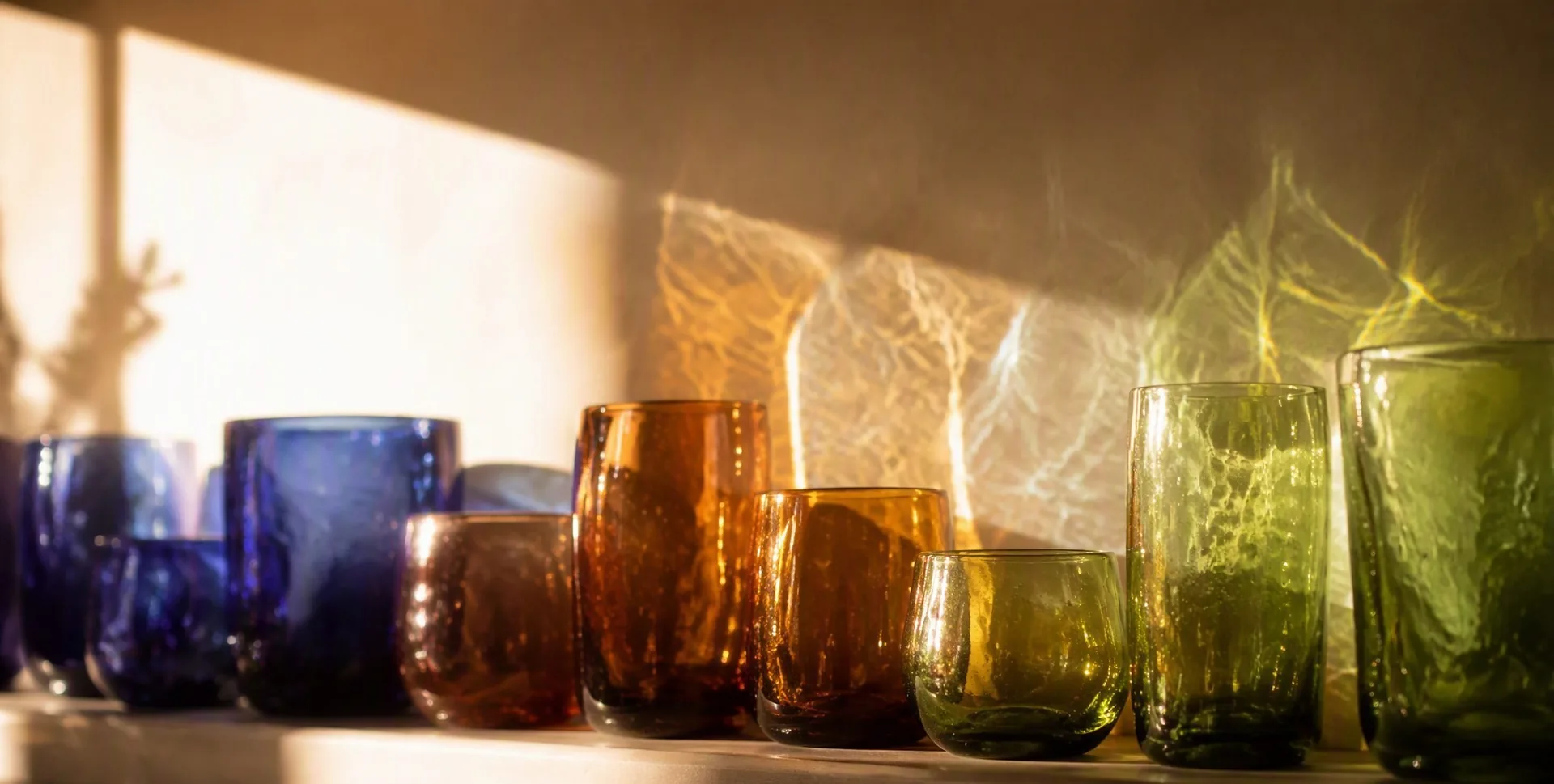
An amber whiskey tumbler may owe its hue to a pinch of metal oxides melted into the batch, a thin outer layer of colored glass, or simply a coat of kiln-fired paint on the surface. The way color lives inside glass defines the product's character — some pieces carry depth to the core, others wear a luminous shell, and still others sport a delicate surface finish. For buyers, choosing the right coloring method matters even more than choosing the right shade.
Body Tinting: Color Born in the Furnace
Body tinting (full-color or body-tinted glass) is the oldest and most thorough coloring method. At 1,500°C, metallic oxides such as cobalt, iron, and selenium are introduced directly into the molten batch, fusing color into the glass at the molecular level. The result is uniform saturation throughout — cut, ground, or engraved, every cross-section reveals the same rich tone with no telltale white edges.
This color is as permanent as the glass itself. It withstands acids, alkalis, and UV exposure, and is fully dishwasher-safe — making it ideal for high-turnover hospitality glassware and everyday dining. The trade-off: every color change requires a full furnace purge, raising the cost floor for small-batch orders.
Casing: Two Layers of Glass, Perfectly Fused
Casing (or overlay) is a signature technique of hand-blown glass. The artisan first blows an inner vessel in one color, then encases it — while still molten — in a second layer of clear or contrasting glass. The two layers fuse at the molecular level as they cool. Once set, the outer layer can be carved, sandblasted, or acid-etched to reveal the color beneath, creating a sculptural depth that no surface treatment can replicate.
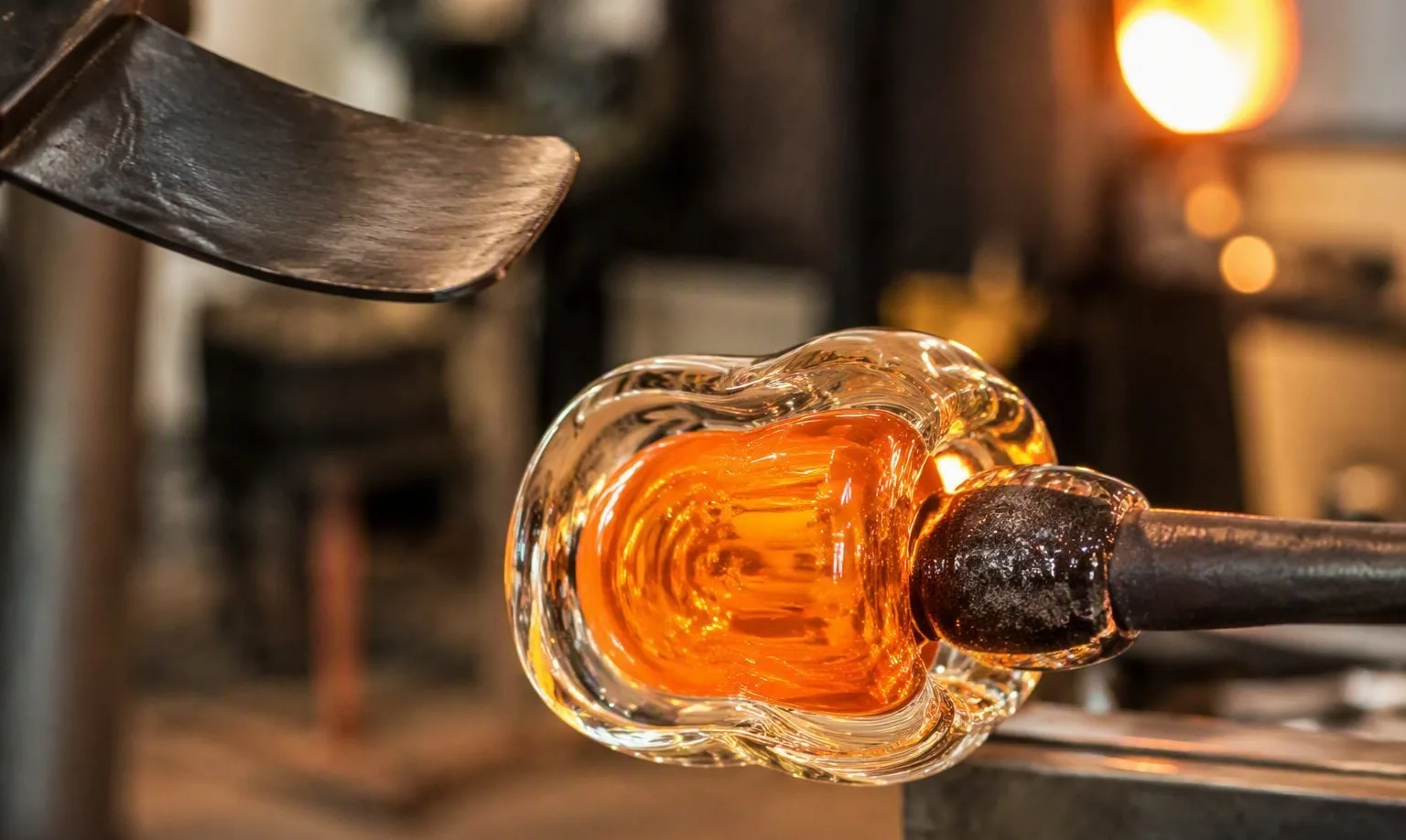
- The dual-layer construction delivers a distinctive hand-feel and optical depth, perfect for premium barware, art objects, and limited-edition collaborations.
- When the outer layer is clear, the inner color appears to float as liquid is poured in — a visual effect far richer than single-layer body-tinted glass.
- After carving, the revealed color remains physically encased by the outer glass, so it will not wear off in daily use — though a hard impact may chip the outer layer.
- The process demands precise synchronization of temperature and expansion coefficients between the two layers, resulting in lower yield rates and a correspondingly higher unit cost than body tinting.
Spray Painting: A Low-Temperature Surface Finish
Spray painting applies a specialized glass coating to the finished surface, then cures it at low temperature. The color sits on the surface only and does not alter the glass body. Its strength lies in flexibility: a single clear tumbler silhouette can be finished in matte black, gradient gold, or any Pantone custom color at minimal switching cost — a natural fit for fast-moving home brands and seasonal promotions.
But spray finishes have clear durability limits. Prolonged abrasion, strong-alkali detergents, and contact with metal cutlery can all cause the coating to wear or peel. We recommend spray-painted pieces for decorative vases, candleholders, low-use charger plates, or gift glassware with a hand-wash-only label.
Shangzhuo's Approach: Letting Color Live Where It Belongs
Based in Qixian — the heartland of China's hand-blown glass industry — Shangzhuo has served clients across 30-plus countries for fifteen years. Our team of 156 artisans, backed by a complete post-processing chain (kiln firing, cutting, sandblasting, ion plating, screen printing, and laser engraving), allows us to combine multiple techniques on a single product: body tint for the base, casing for form, spray paint for the finishing touch. We don't believe any one method is inherently superior — what matters is how long the color will live, and how well, in your specific use case.
Bring Us Your Use Case
Will your next collection run through a commercial dishwasher three hundred times a day, or appear on the table once a year for a holiday dinner? Does the color need to last a decade, or simply shine in this season's window display? Bring us your specific challenges — together, we'll decide exactly how that color should live.
body-tinted glasscased glassspray-painted glasswarecolored glass manufacturingglass coloring techniqueswholesale glasswarecustom colored glassglass finishing
Reading this far means you choose suppliers carefully
Tell Xiaozhuo what you have in mind — a few sentences are enough; we handle the rest.
Start a smart inquiry