SANZO JOURNAL · 喷砂与酸洗蒙砂的肌理差别、手感与指纹残留、雾面与透明的分区设计
Sandblasted vs. Acid-Etched: Two Faces of Frosted Glass
4 min read
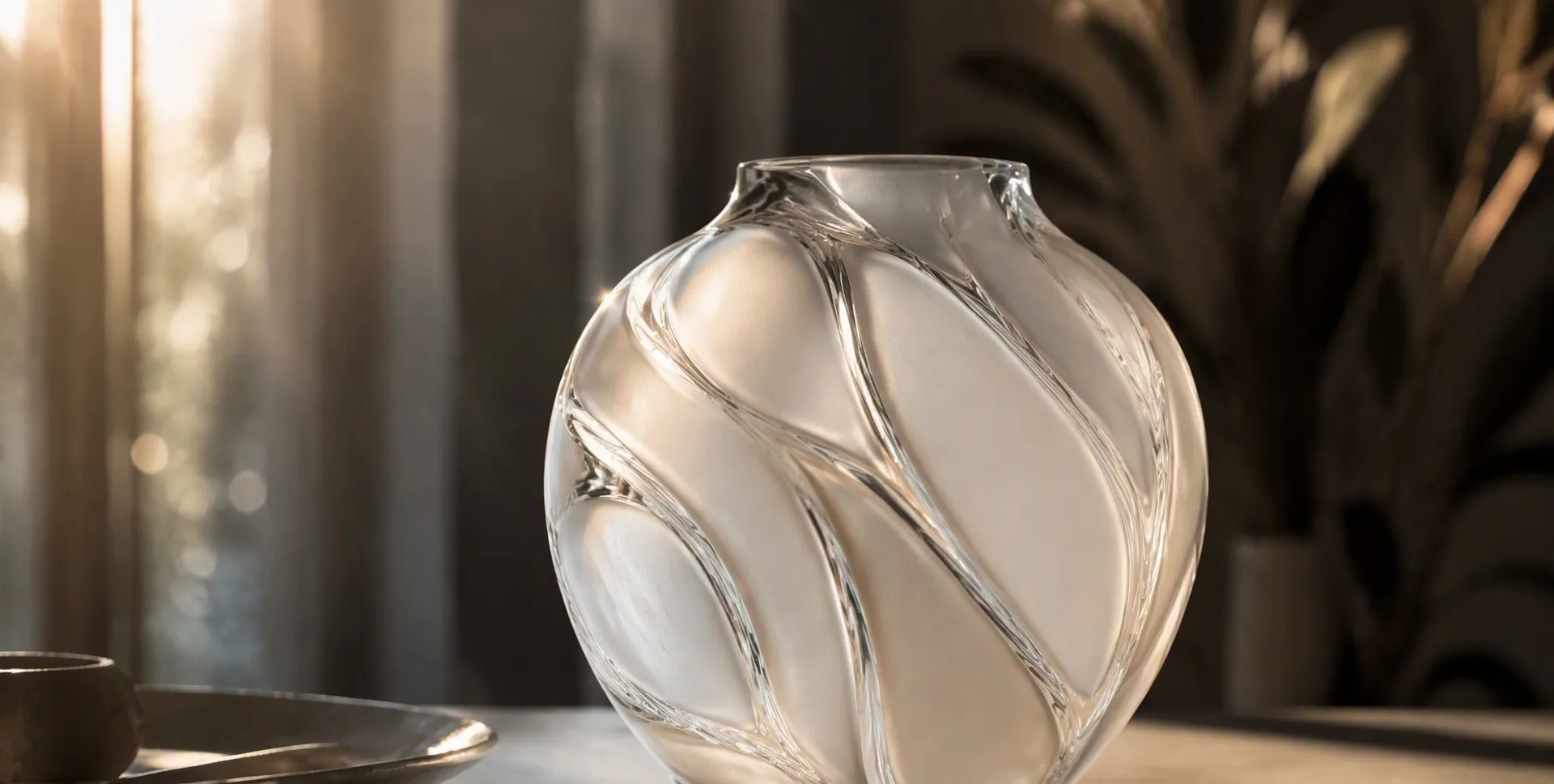
At a restaurant at daybreak, a tumbler arrives at the table — its lower half frosted, its upper half crystal-clear. Overhead light hits the glass: the frosted zone absorbs glare, while the clear band frames the silhouette of a lemon slice. That interplay of concealment and reveal isn't something you fake by slapping a gray gradient onto a rendering. It's the result of two fundamentally different finishing processes: sandblasting and acid etching.
1. Texture: Grit vs. Velvet
Sandblasting propels abrasive media — garnet or glass beads — at high velocity against the glass surface, creating a dense field of micro-pits through mechanical impact. Under raking light you'll see uniform granulation; the surface feels faintly coarse, like the back of fine-grit sandpaper. Acid etching, by contrast, submerges the glass in a hydrofluoric-acid-based bath, where chemical dissolution carves irregular, sub-micron undulations. The result feels closer to suede or soft wax, with a gentler, more diffused light scatter. In short: sandblasting hammers the haze onto the glass; acid etching dissolves it in.
2. Hand-Feel & Fingerprints: Which One Ages Gracefully?
In a high-turnover hospitality setting, fingerprints are the nemesis of frosted glass. The deeper pits of a sandblasted surface trap skin oils, which fill the micro-craters and create visible shiny spots — meaning more frequent wiping. An acid-etched surface has shallower, more continuous micro-texture, so oils spread evenly and fingerprints stay far less noticeable. Maintenance costs drop accordingly. This is precisely why premium hotels gravitate toward acid-etched finishes: they withstand an entire evening of passing hands and constant contact.
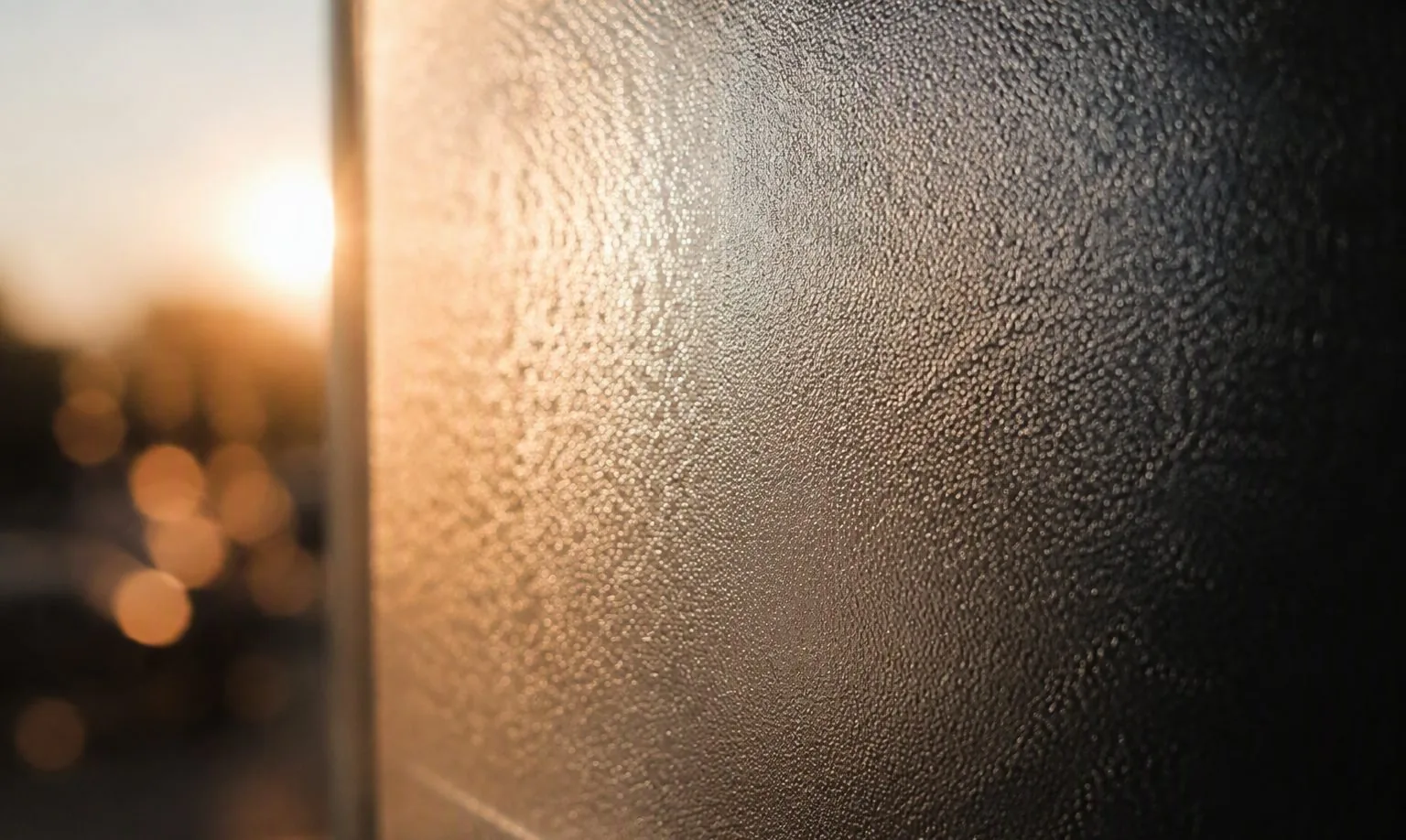
3. Designing the Boundary Between Frosted and Clear
- Mask + sandblast: cost-effective; works well for straight lines or geometric divisions, though edges can show slight serration — ideal for a bolder aesthetic.
- Mask + acid etch: the resist must withstand acid exposure, but the resulting demarcation line is crisper — suited to minimalist or curved transitions.
- Spot UV ink coating: enables multi-tonal frosted layering, though film abrasion resistance should be tested; best reserved for decorative zones rather than grip areas.
- Ion plating + etching combo: deposit first then etch — or etch first then plate — to achieve a frosted base with metallic highlights. The process chain is demanding, and Shangzhuo can deliver it end-to-end.
4. The Shangzhuo Approach: We Don't Pick the Process for You — We Ask How You'll Use It
After fifteen years in Qixian — China's glassware heartland — Shangzhuo's 156 artisans control every step from mouth-blowing to final finishing. We always tell our clients: first tell us who will hold this glass, how often, and how it will be washed. Only then do we decide between sandblasting and acid etching. Exporting to more than 30 countries has taught us that no process is inherently superior — only better or worse matched to the job. A frosted finish isn't the goal. The goal is a piece that feels right in the hand, looks right on the table, and performs right under the lights.
If you're weighing the coarseness of a frosted zone, the placement of a clear-frosted boundary, or how much fingerprint visibility you can live with — bring us your samples, sketches, or use-case scenarios. We won't just say 'we can do that.' We'll help you find the right finish for the job.
frosted glasswareacid-etched glasssandblasted glasscustom glass finishingrestaurant glassware suppliermatte finish glasshospitality glasswareOEM glass manufacturer
Reading this far means you choose suppliers carefully
Tell Xiaozhuo what you have in mind — a few sentences are enough; we handle the rest.
Start a smart inquiry